How Boiler Makers Get More Enquiries: Website, Marketplaces and LinkedIn
Where boiler enquiries come from and how to get more of them: product pages that match searches, marketplaces, LinkedIn, referrals, and answering fast.
4 min read
By the Yantra Boilers team
Key takeaways
- Buyers search for the capacity, fuel and industry they need: give each of those a page of its own.
- Put one enquiry form behind every button, link and QR, and tag each so you know which sources bring orders.
- Marketplace leads are often sent to several suppliers: the maker who calls back first with sensible questions usually gets the quotation.
- Plant heads check a maker's LinkedIn page before they call; a steady stream of real projects is the best advertisement.
Boiler makers get enquiries from five places: referrals, exhibitions, B2B marketplaces, search engines and, increasingly, LinkedIn. Most makers depend on the first two and treat the rest as luck. A few simple changes make the others a steady source.
A website that matches the search
Plant engineers do not search for “boiler manufacturer” and read the first site. They search for what they need: a husk fired boiler for a rice mill, a thermic fluid heater for a dyeing unit, a 4 TPH FBC boiler, a maker in their state. A site with one products page cannot match those searches. A site with a page for each product range, each capacity band and fuel, and each industry you serve can.
- One page per product range, with the capacities, pressures and fuels you build.
- One page per industry, saying which of your boilers suit it and why.
- Approvals, your workshop, and projects you can name: the proof buyers look for.
- A Request a quotation button on every page, into a form that asks the right questions.
One enquiry form everywhere
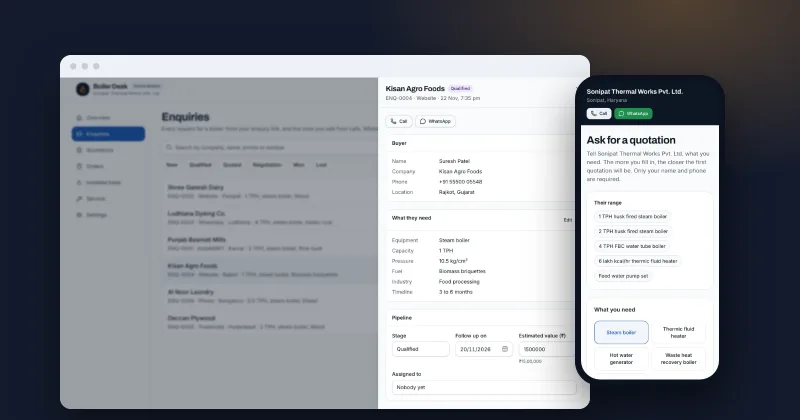
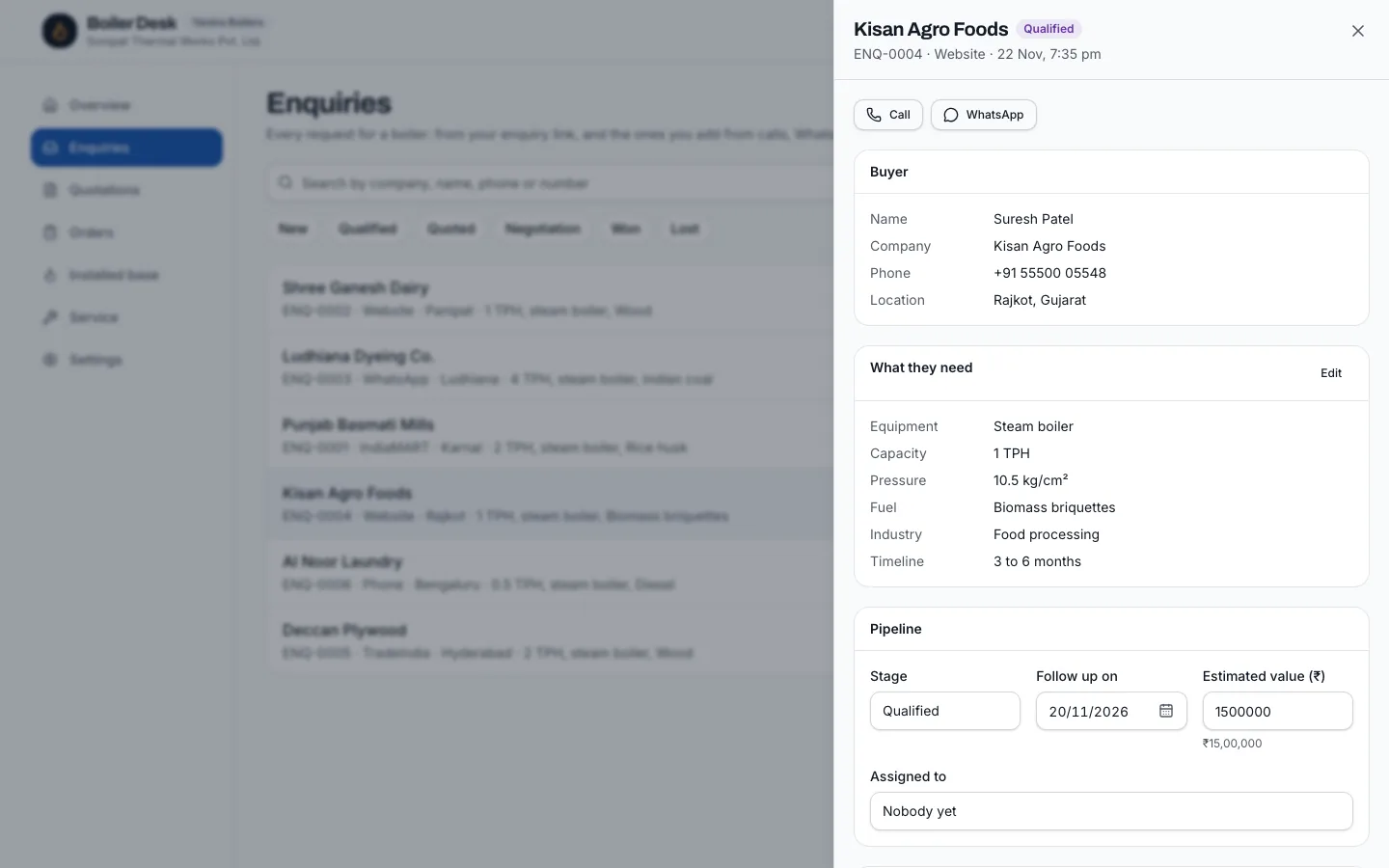
An enquiry that says only “need boiler, call me” costs a call before it can be priced. A form that asks for equipment, capacity, pressure, fuel, industry and timeline, with a sizing helper for buyers who are unsure, brings enquiries your engineer can quote. Use the same form behind your website, your WhatsApp status, your email signature and the QR on your exhibition stall, and tag each copy so you can see which sources bring orders, not just enquiries.
Marketplaces: speed wins
B2B marketplaces such as IndiaMART and TradeIndia bring a volume of enquiries, but a buyer’s requirement is often shared with several suppliers. The maker who calls back first, with two or three sensible questions about load, pressure and fuel, usually gets to quote. Add each marketplace enquiry to your pipeline with its source, so it is followed up like any other and you can judge what the subscription is worth.
Plant heads, purchase managers and consultants look at a maker’s company page before they pick up the phone. A page with recent dispatches, commissioning photos and new models says the factory is busy and capable. Post when something real happens; a short post with a good photo of a boiler leaving the shop does more than a polished brochure.
Referrals and consultants
Your installed base is your best salesforce. A plant that is well served recommends you; a consultant who has seen your boilers run specifies you again. Staying in touch with both, through service and the occasional email, keeps those referrals coming.
Answer fast, and follow up
Whatever the source, the enquiry is worth most in its first day. Call back the same day, send the quotation within the week, and put a follow-up date on every enquiry so none is forgotten when the owner is travelling.
Exhibitions
Industrial exhibitions still bring serious buyers, but the cards collected on the stand are often lost by the time the team is back. Put a QR code for your enquiry form on the stand, tagged as exhibition, so visitors can send their requirement there and then, and add the cards you collect to the pipeline the same week.
What to measure
- Enquiries a month, by source.
- How many of each source's enquiries got a quotation, and how many became orders.
- How long the first call took, from enquiry to call.
- Why enquiries were lost: price, delivery, capacity, or no reply.
Kept for a year, these four numbers tell you where to spend next year: which marketplace to renew, whether the website is pulling its weight, and whether faster replies would win more.
A weekly routine
- Monday: go through new enquiries from the weekend and call each one back.
- Tuesday: chase quotations sent last week that the buyer has opened but not answered.
- Wednesday: post one real project or dispatch on LinkedIn, with a photo.
- Thursday: add any marketplace and exhibition enquiries that have not been entered, with their source.
- Friday: look at the follow-ups due next week, and mark lost enquiries with the reason.
None of it takes long, and done every week it turns enquiries from something that happens to you into something you can grow. The routine matters more than any single channel: a maker who answers every enquiry the same day and follows up every quotation will win orders that a better-advertised competitor lets go cold.
Finally, ask every new buyer how they found you, and record it. Over a year, the answers tell you more than any analytics tool about which channels deserve your time and money.
Frequently asked questions
- Is a website still worth it if we sell through IndiaMART?
- Yes. Marketplaces bring volume, but many buyers check the maker’s own site before calling, and a site with pages for your products and industries brings enquiries that are not shared with competitors.
- What should a boiler enquiry form ask?
- Equipment type, capacity, working pressure, fuel, industry, what the steam is for, timeline, and a name and phone number. Make only the name and phone required.
- How quickly should we reply to an enquiry?
- The same day if you can. Buyers usually contact several makers, and the first sensible call often decides who gets to quote.